Every retreat has a supply chain. Most retreat operators default to the nearest supermarket and a couple of wholesale accounts. We made a different decision early on, and it has shaped how the retreat functions — and how it's perceived — more than almost any other single choice.
The philosophy is simple: money spent locally stays local. It builds relationships with the people who share our landscape. It produces better food. And it gives us stories to tell guests that are true, which is the only kind of story worth telling.
## Bread
Our bread comes from a padaria in the nearest village, about 8 kilometres away. They've been baking in the same stone-floor oven since the 1970s. We collect three mornings a week during retreats: a mixture of broa de milho (the dense corn-flour bread of northern Portugal, slightly sour, extraordinarily good with cheese) and standard wheat loaves.
The practical reality: it requires a 20-minute round trip three mornings a week. We cannot place an order at 11pm for delivery at 7am. There is no direct-debit arrangement. We pay in cash, on collection.
What it returns: bread that guests talk about by day two of a retreat. Freshness that no wholesale supplier can match at our volume. And a relationship with a family whose great-grandfather built the oven, which is something.
## Eggs and Chicken
A fifth-generation quinta neighbour keeps approximately 150 mixed-breed free-range chickens and, rotationally, a small number of ducks. We buy all our eggs from her and, when her slaughter cycle aligns with retreat weeks, fresh chicken.
The eggs are notably different from commercial eggs: deep orange yolks, thick whites, the result of genuinely mixed foraging on a real agricultural smallholding. Guests notice. We've stopped explaining why breakfast eggs look different, because the conversation now usually starts from the guest side.
Cost: roughly 30–40% more than supermarket eggs. Not competitive with wholesale. We pay it anyway.
## Olive Oil
A local lagar (mill) 12 kilometres away processes olives from groves across the valley, including several that are centuries old. We buy five-litre tins of unfiltered extra virgin oil produced from a blend of the local Cobrançosa and Madural varieties. First pressing, low acidity, harvest-to-mill in under 24 hours.
This is genuinely one of the best olive oils we've eaten from anywhere. We use it for everything. We sell small bottles in our shop. We tell guests where it comes from. Several have asked how to order it directly, which we facilitate without taking a margin — that transaction is between them and the producer.
## Wine
The nearest adega with consistent quality is about 25 kilometres, a small producer with 8 hectares of Vinhão and Loureiro. We serve their wines exclusively at retreat dinners. Their Vinho Verde red — Vinhão, deeply coloured, slightly tannic, almost always a surprise to guests who associate Verde with fizzy white — has become something of a conversation piece.
We have a standing arrangement: we take what they produce that year; they give us a consistent price and never sell out from under us. The relationship works because both sides keep to it.
## Building Materials
Two local sources have supported every construction project on the land so far.
A local *serração* (sawmill) 15 kilometres away sells us rough-sawn chestnut and oak for structural and cladding use. Chestnut is exceptional for outdoor use in this climate — naturally durable, no treatment needed. The mill owner has given us practical advice about timber selection on every visit, which is worth more than the price saving.
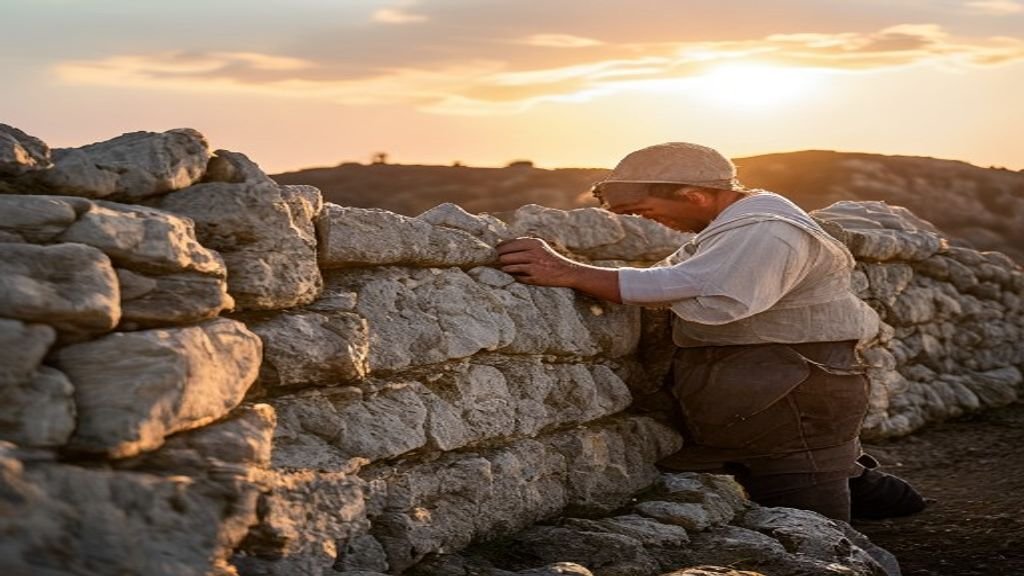
For stone — and this land has no shortage of granite — we use a local pedreira for cut stone lintels and flagging. The granite comes from the same geological formation the land sits on, which means new construction matches what has been here for 200 years. This is not a minor aesthetic point.
## Mechanical Help
A local serralheiro (metalworker) two villages over has fixed, fabricated, and improvised solutions for more things than we can easily list. Water system failures, gate hardware, trailer repairs, a bracket for the solar panel array that the original installer didn't include. He charges a fair rate and responds within 24 hours. We have never managed to find anyone faster or more reliable at any price.
## Cleaning
Retreat days generate significant cleaning work. We have a fixed agreement with a woman from the nearest village who brings a cousin during retreat weeks when we need three pairs of hands. She has worked in the farmhouse longer than we've owned it — the previous owners introduced her to us on handover day, which was one of the most useful things they did.
This arrangement means the cleaning is done well and quickly, the person doing it is invested in the property, and the money stays within two kilometres.
## The Honest Trade-offs
None of this is without friction. Local suppliers have inflexible schedules. The padaria is closed on Mondays. The quinta neighbour goes on holiday in August, which is one of our busiest months. The serralheiro sometimes takes three days rather than one when lambing is happening.
What it costs us: flexibility, predictability, and occasionally convenience.
What it returns: freshness, quality, community goodwill, authentic stories, and a relationship with the landscape that guests sense without being able to name it precisely. You cannot manufacture that. You can only build it over time by spending money where you live.
---
*We're building something here that's part of the local economy, not apart from it. If that kind of retreat interests you, see the 2026 programme.*